

Celebrating the International Year of the Woman Farmer
The United Nations (UN) has declared 2026 the International Year of the Woman Farmer (IYWF) a global moment to recognize the vital yet often overlooked contributions of women across agrifood systems. From production to processing, trade to traditional knowledge, women are at the heart of how food is grown, shared, and sustained. Yet, their work often goes unrecognized.
As the UN defines them, women farmers are all women working in agrifood systems in different capacities across all segments of value chains. They are farmers, producers, smallholders, seasonal laborers, fishers, pastoralists, beekeepers, processors, traders, scientists, and rural entrepreneurs. They are young and older women, Indigenous women, women in local communities, women with disabilities, and those who are displaced.

Women have long been stewards of biodiversity, holders of ancestral land knowledge, and pillars of family wellbeing. Yet despite producing and tending so much of the world’s food, they are often overlooked and under-resourced. While women make up around 43% of the global agricultural labour force they face significant barriers to access finance and productive resources. Around 5% of funding for agribusiness goes to women (World Economic Forum, 2019), and less than 20% of agricultural land is owned by women (FAO; World Bank).
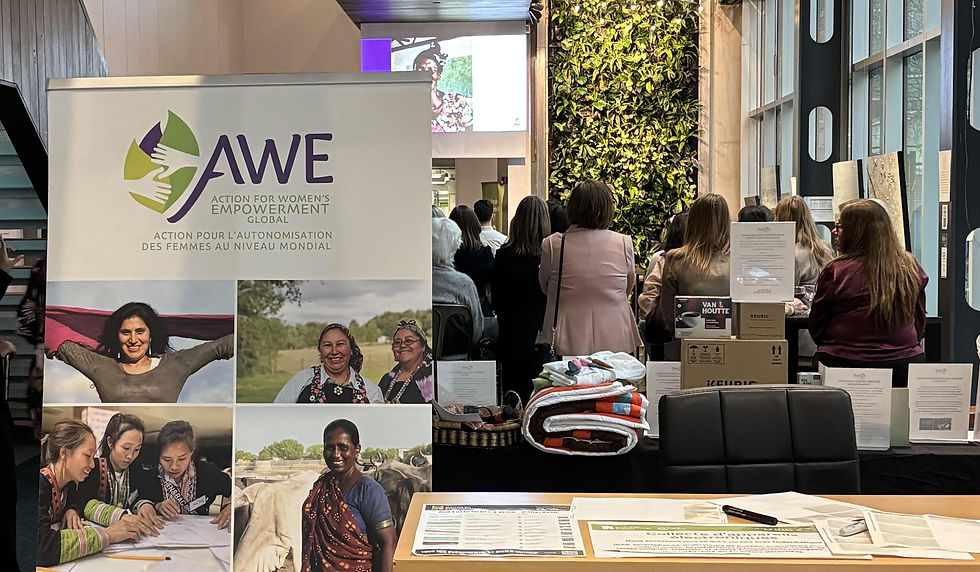
AWE’s work is aimed at redressing this imbalance. We equip women farmers with entrepreneurship, leadership, and sustainable livelihood skills so they can earn revenue, strengthen their influence in their communities, and nourish stronger, more resilient food systems. When women thrive, the impact is far-reaching. Families are healthier. Girls stay in school. Communities become more resilient. Investing in women is one of the most powerful ways to create lasting change.
“Women farmers are at the heart of food security and community resilience,” said Dr. Jennifer Lonergan, Executive Director of AWE. “Recognizing their contributions and investing in their economic opportunities is essential to building stronger, more inclusive agricultural systems.”
This year, the UN is calling for collective action and increased investments to close gender gaps, strengthen women’s livelihoods and promote their leadership across agrifood value chains.
AWE looks forward to continuing its work with partners and communities around the world to support women’s economic leadership and create pathways toward lasting prosperity, starting with Stronger Together: Women Farmers, Sustainable Futures, an AWE Global event where we will also share what lies ahead, including the launch of our next program in Malawi later this year.


Comments